
CELEBRATING UNSUNG CLIMATE LEADER : WENDY OMANGA
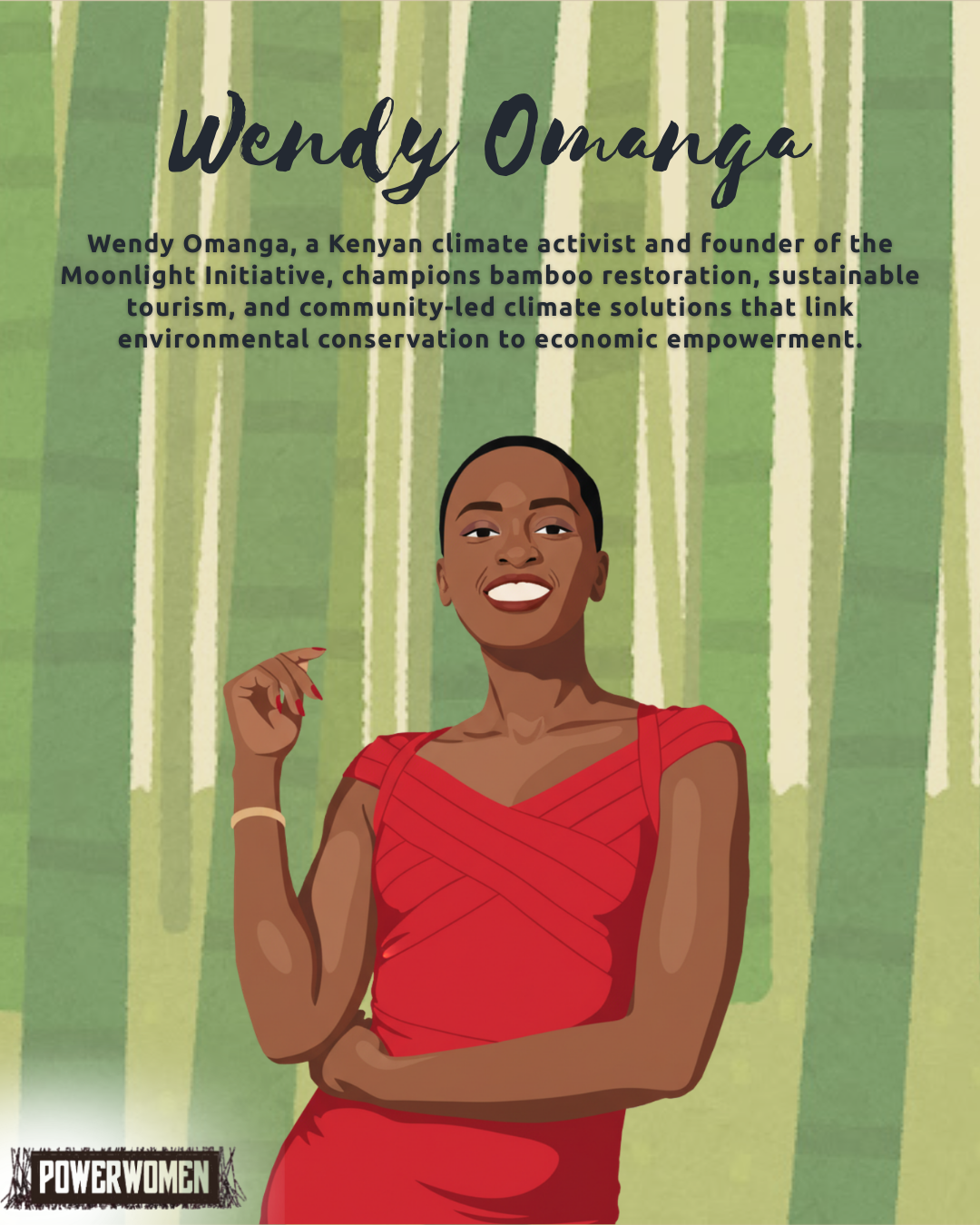
This International Women's Day, Surge Africa celebrates the often-overlooked women leading climate action across the continent. Among them is Wendy Omanga, a Kenyan climate advocate whose motivation was sparked by a childhood memory: her family's home being swept away in floods. That experience inspired her to establish the Moonlight Initiative, a community project that uses bamboo to restore riverbanks, protect communities, and promote sustainable livelihoods. Wendy has planted over 50,000 seedlings, trained women in bamboo businesses, and organised river trips with young activists through Rafting 4 Climate. She shows that African women are not just victims of climate change but are actively leading the solutions. This is her story.
What inspired you to take action in the fight against climate change, and what keeps you motivated despite the challenges?
In 2005, my family lost our home during a devastating flood in Nyando, Kisumu County, which sparked my drive to fight climate change. Studying Political Science and Communication led me to discover bamboo as a nature-based solution for flood control, inspiring me to launch the Moonlight Initiative in 2018. We work with farmers and partners, such as the International Bamboo and Rattan Organisation (INBAR), to restore riparian lands by planting bamboo along rivers that flow into Lake Victoria, thereby protecting communities while creating sustainable livelihoods.
My motivation comes from witnessing real change: farmers now see bamboo as both a source of protection and income, and communities reclaim their rivers as sources of life. Being trained by CNN Academy as a climate storyteller taught me the power of sharing these stories to inspire others and show that solutions exist right here in Kenya. Ultimately, I am driven by the memory of that little girl in Nyando who lost her home, and the determination to build a future where no other child experiences that pain, showing that African women and youth are not just victims of climate change, but leaders with solutions to heal the land and protect our people.
Share the project or initiative you’ve led that has significantly impacted your community
The Moonlight Initiative, which I founded in 2018, is the project closest to my heart. It was born of my childhood experience watching our family home wash away in Nyando's floods and of my determination to find community-led solutions. We use bamboo's deep roots to naturally stabilize riverbanks and protect downstream communities. With support from relevant stakeholders, we've planted over 50,000 seedlings, established bamboo villages in Kakamega, produced the National Bamboo Documentary, and mapped over 50 new farmers ready to join this work.
The impact goes beyond flood prevention. I want the community to see bamboo as more than a plant; I want it to be an income source. Bamboo can produce over 10,000 products, from furniture to fabric. While healing the land, we're creating new jobs and businesses. We've signed an agreement with the Ministry of Housing to explore the use of bamboo in building affordable homes. Imagine a future where bamboo not only protects your home from floods but also helps build it.
Through the Moonlight Initiative, my goal is to inspire communities to plant 10 million trees in 10 years to help protect our environment. We collaborate with schools to establish nurseries and teach conservation. This work follows the example of Professor Wangari Maathai, showing that local people can solve environmental problems too.
What are some of the biggest challenges you face in your work, and how have you been able to overcome them?
I love this work, but I won't pretend it's easy. The challenges come from all directions—cultural resistance as a young woman discussing land issues, gender discrimination in meetings where people underestimate me, constant funding gaps between our vision and resources, and the loneliness of building a team from scratch. But I've learned to handle each one: earning community trust by starting with women and elders, letting partnerships and data speak for me in rooms where I'm not taken seriously, stretching every dollar through training and collaborations, and staying consistent until the right people found me. Today, with a strong team and proven results, every bamboo seedling standing tall reminds me why we fight—and that the young girls watching will have a smoother path because we walked this one first.
How do you engage and empower other women and young people to take action on climate and environmental issues?
For me, empowering others is the whole point, and if I'm only planting bamboo, I've failed. In schools, we establish tree nurseries and gardens, so children learn by getting their hands in the soil. When a young girl plants a tree and watches it grow, she learns that she, too, can grow into something strong. Through training, I pass on skills I gained from programs like YALI, teaching women and farmers how to turn bamboo into real business opportunities from the over 10,000 products it can produce. With climate storytelling, we make conservation adventurous. Through Rafting 4 Climate, we take young people on rivers in kayaks, cleaning riverbanks while discussing climate justice. Being on the water makes it real in a way no classroom ever can. Using my platform as Miss Jungle Kenya, I show that beauty and brains belong together. When young girls see a queen planting trees, they start to believe: if she can do it, I can too. I tell them to find a problem in their community and go solve it. Through global networks, I connect young Kenyans with conferences and fellowships worldwide, showing them they are part of a movement far bigger than themselves. Whether it's a schoolgirl planting her first seedling or a woman learning to run a bamboo business, I want them to know they're not just helping the environment, they're building their own future. And I'll be right there beside them, cheering them on every step of the way.
Wendy is among the seven women we're highlighting for IWD 2026. You can learn more about the Unsung: Power Women Campaign here. Follow and support Wendy's work here.