
IWD 26: THE UNSUNG CLIMATE HEROES
#POWERWOMEN-unsung Campaign
Some climate leaders make headlines, often through podiums, press conferences, and extensive global travel. We see these figures on our screens and celebrate them.
Another silent form of climate leadership occurs away from the news: in recycling yards at sunset, on muddy forest trails guiding tourists past endangered gorillas, in village meetings where women learn new farming techniques due to erratic rains, and in government offices where women advocate for policies that consider those affected by climate change. These are the unsung leaders.
Across Africa, these women see climate action as more than just a job; it's part of their daily lives. They serve as mid-level professionals connecting global climate ambitions with local realities. As grassroots organizers, they consistently show up, often unseen by outsiders. Their efforts include training other women, planting trees, sorting waste, educating children, protecting forests, and campaigning for inclusive laws that amplify voices typically marginalized.
Their work may lack glamour; it's often slow, challenging, and overlooked. However, it is essential for keeping systems functioning. Without their efforts, the major climate commitments made at conferences would remain unfulfilled on paper. Moreover, communities would confront floods, droughts, and food shortages without anyone to guide them towards alternative solutions.
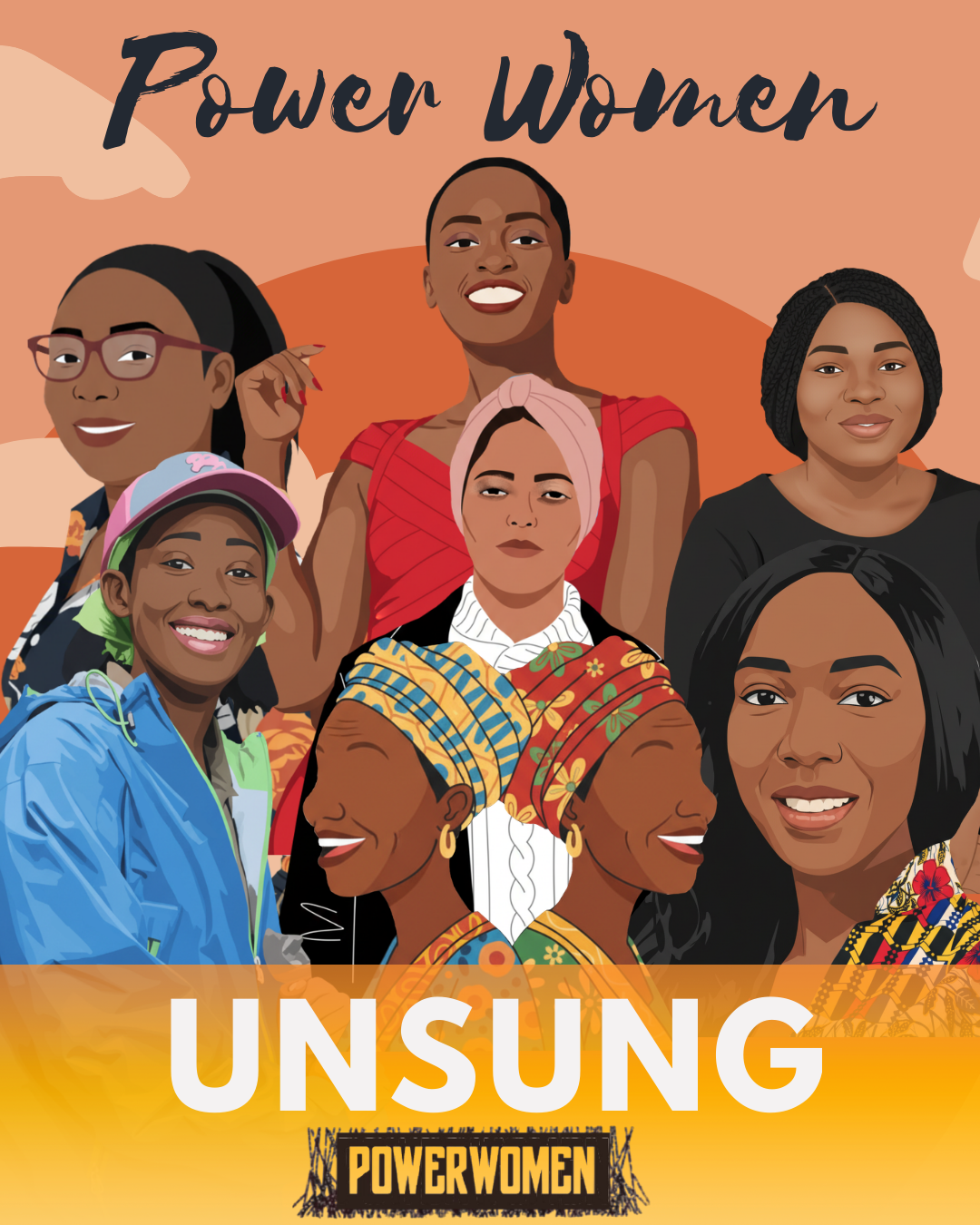
Group Illustration of the #Powerwomen-unsung
#POWERWomen-UNSUNG Campaign: UNTOLD STORIES OF African Women DRIVING Climate ACTIONS
These women aren't waiting for approval or acknowledgement; they are already making an impact. However, recognition is important because prolonged silence can lead others to think their efforts are invisible. When support diminishes, funding shifts away, and policies overlook them.
This International Women's Day 2026, Surge Africa highlights their stories. With the theme "Rights. Justice. Action. For ALL Women and Girls" we focus on spotlighting the women whose actions sustain us as a build up on our #powerwomen campaign from last year.
Here are their stories.
Jolie Mukiza (Rwanda)
Jolie is one of just three female guides for gorilla trekking in Rwanda’s Volcanoes National Park. Each day, she guides visitors through the jungle to encounter endangered mountain gorillas. Despite the physical challenges of her role, she performs her duties with expertise and compassion. Encouraged by her mother to pursue her passion for nature, Jolie is now breaking barriers in a traditionally male-dominated field. She safeguards wildlife and motivates other women to follow suit.
Gloria Kasang Bulus (Nigeria)
Gloria works at the intersection of grassroots action and global policy. Through her work with the Bridge That Gap Initiative, she trains women in Kaduna State to advocate for climate policies that meet their needs. She has helped plant over 10,000 trees, equipped displaced women with new skills, and created spaces for communities to speak directly with lawmakers. Her goal is simple but powerful: ensure women are not just included in climate conversations but leading them.
Benitha Bompedju (Democratic Republic of Congo)
Benitha is a frontline forest protector. As a community facilitator with GASHE, she trains local and Indigenous communities to oversee their forests and champion their rights. Her efforts emphasise the involvement of women in resource management, even in the face of authority-side corporate interests. Though her work can be risky, she persists because she believes that forests and their dependent communities warrant
Wendy Omanga (Kenya)
Wendy is a climate activist, journalist, and beauty queen. As Miss Jungle Kenya 2022, she uses her platform to advocate for bamboo farming aimed at riverbank restoration and sustainable housing. Growing up in a flood-prone region, she has a deeply personal work. Through her Moonlight Initiative and initiatives like “Rafting 4 Climate,” she blends adventure with education, helping communities to restore their environment and develop their livelihoods.
Rim Ben Soud (Tunisia)
Rim is a rural farmer and community leader in a society where women often face limited access to land and resources. In 2016, she established a women’s agricultural group that has grown to 200 members. The group focuses on climate-resilient farming techniques, product diversification, and mutual support. Rim also manages an eco-tourism initiative on her family farm to encourage sustainable agriculture and promote local food. She advocates daily for women’s rights to land ownership, access to loans, and participation in climate action.
Salamatu Abukari and Memunatu Abudu (Ghana)
Salamatu and Memunatu, two grandmothers, journeyed to India for UN-supported training and came back as their village's pioneering solar technicians, dubbed the "Solar Grandmothers." They install solar panels, service off-grid systems, and fix equipment, illuminating more than 150 homes in rural Northern Ghana. Additionally, they train young people and instruct families on how to operate the technology, helping to keep the knowledge within the community.
Oluwatobi Williams (Nigeria)
Oluwatobi sees waste as a potential for beauty. Through her organisation, Recycle Articreate Initiative, she educates children and young people on transforming non-biodegradable waste into art. Additionally, she established FEMINWASTE, an event honouring women in all areas of waste management, from collectors to policymakers. Her work demonstrates that environmental efforts can be creative, inclusive, and driven by women.
This IWD 2026, we invite you to focus your attention, acknowledge, and support efforts to create a stronger, more just, and resilient future together.
Join us as we share their complete stories throughout the campaign on our social media handles.