
CELEBRATING UNSUNG CLIMATE LEADER : GLORIA BULUS
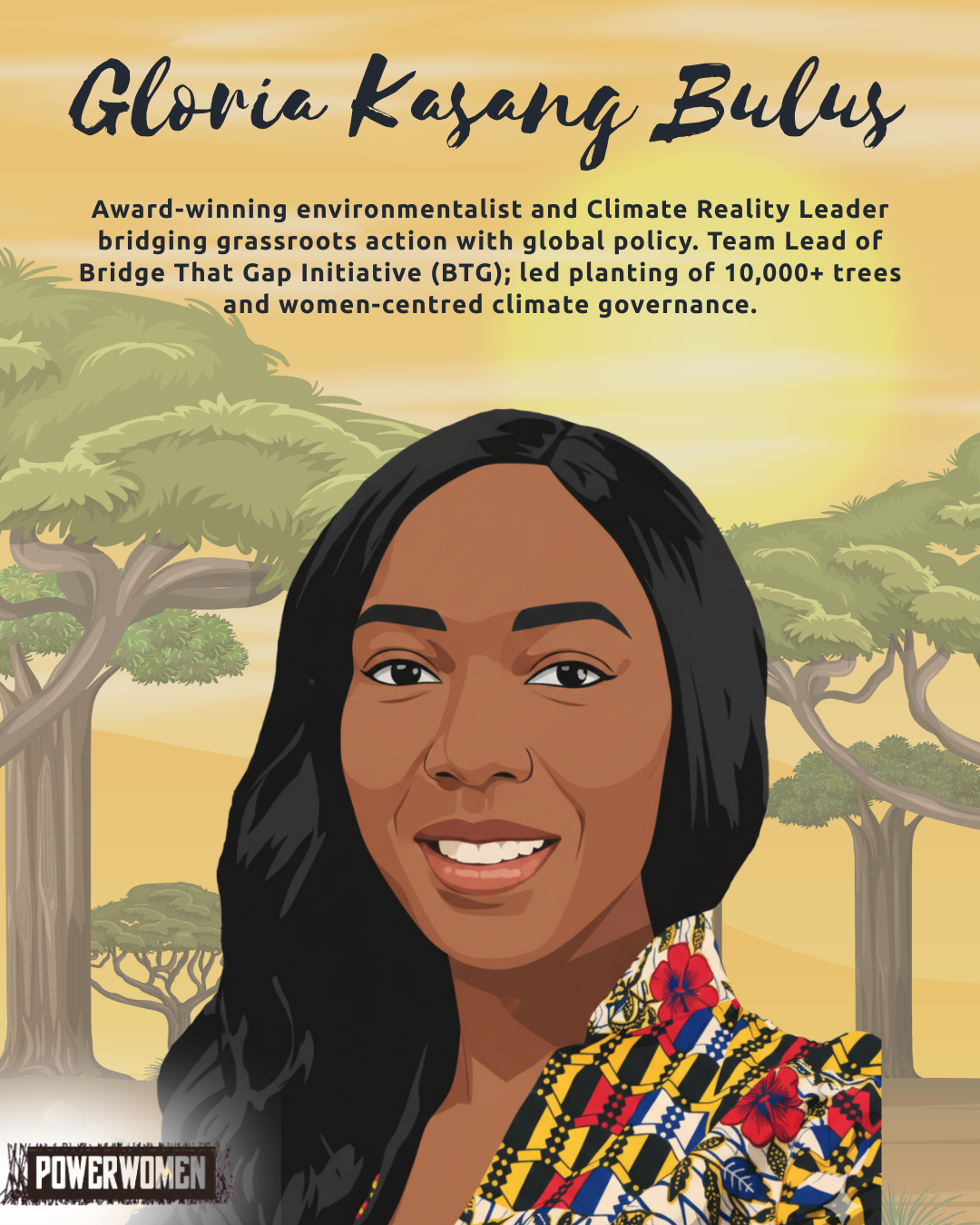
This International Women's Day, Surge Africa honours women making a difference in climate action across the continent. One such woman is Gloria Kasang Bulus, a Nigerian climate advocate whose efforts connect grassroots resilience with top-tier policy work. As the founder of the Bridge That Gap Initiative (BTG), Gloria has spearheaded impactful projects, including training women in climate advocacy in Kaduna State, planting over 10,000 trees, and creating dialogue platforms that link civil society and policymakers. Her contributions have earned her titles: Sarauniyar Sauyin Yanayi (Queen of Climate) and Jakadiyar Sauyin Yanayi (Ambassador of Climate), highlighting her role in embedding climate initiatives into community life. From empowering displaced women with smart agriculture to establishing the Network of Civil Society in Environment (NCSE), Gloria demonstrates that true change begins with women in leadership. This is her story.
What inspired you to take action in the fight against climate change, and what keeps you motivated despite the challenges?
My journey into climate action was inspired by the urgent need to protect vulnerable communities in Nigeria, who are disproportionately affected by environmental degradation and climate change. Witnessing firsthand how floods, droughts, and poor environmental governance impact livelihoods pushed me to act. What keeps me motivated is the resilience of women and young people I work with; seeing them transform into climate advocates and community leaders reminds me that change is possible when we act collectively.
Share the project or initiative you’ve led that has significantly impacted your community
Through the Bridge That Gap Initiative (BTG), I led the Women Empowerment and Climate Resilience Initiative (WECRI) in Kaduna State, training women to advocate for inclusive climate policies and lead grassroots adaptation solutions across Zaria, Chikun, and Zango Kataf. BTG has also implemented transformative projects, including a UN Peacebuilding Fund project with UN Women that provides mental health and livelihood support in Katsina and Kaduna; establishing a Permanent Dialogue Mechanism connecting civil society with legislators; convening media roundtables to amplify climate advocacy; running the Rimau Skills Hub training 50 displaced women in tailoring and smart agriculture; planting over 10,000 trees through the Earth Lungs Project; and supporting hazard profiling and early warning systems for disaster preparedness. I also founded the Network of Civil Society in Environment (NCSE) to promote climate awareness and action across Nigeria. Together, these initiatives have advanced climate resilience, peacebuilding, governance reform, women's empowerment, and environmental restoration across Kaduna and beyond.
What are some of the biggest challenges you face in your work, and how have you been able to overcome them?
I addressed challenges by building strong local and international partnerships and leveraging community-driven approaches to maximise impact with limited resources. Cultural and gender barriers have marginalised women in climate governance, but engaging with traditional leaders helped to overcome these obstacles, earning me two royal titles: Sarauniyar Sauyin Yanayi (Queen of Climate) and Jakadiyar Sauyin Yanayi (Ambassador of Climate). Additionally, I have validated women’s leadership in climate advocacy. Due to weak policy implementation, I collaborate with networks such as GNDR, serving as Nigeria’s National Focal Point, to influence disaster risk reduction and climate resilience policies. I also established and led the Network of Civil Society in the Environment (NCSE) to shape policy.
How do you engage and empower other women and young people to take action on climate and environmental issues?
I prioritise capacity building and mentorship. Through workshops, advocacy training, and grassroots mobilisation, I empower women and youth to participate in governance structures and champion climate adaptation. By creating safe spaces for dialogue and amplifying their voices in policy discussions, I ensure they are not just participants but leaders in climate action.
Gloria is among the seven women we're highlighting for IWD 2026. You can learn more about the Unsung: Power Women Campaign here. Follow and support Gloria's work here.